


Threaded Rod: Types, Applications, and Selection Guide
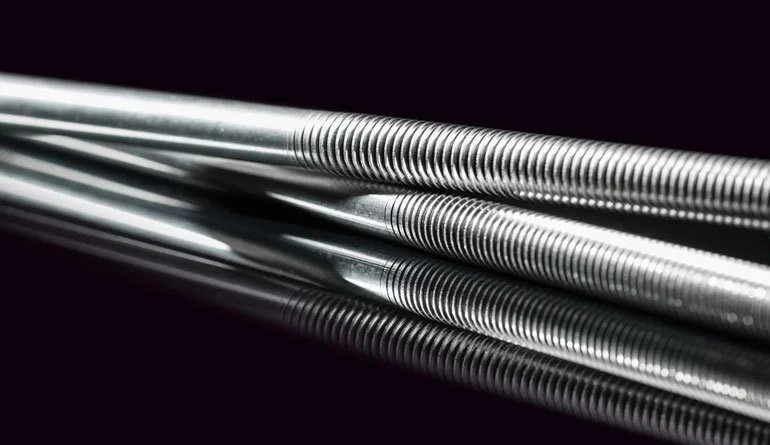
Threaded rod, also known as threaded bar, threaded studding, or screw rod, is a versatile fastening component used for connecting structures, mounting equipment, and creating suspension systems.
Unlike standard bolts and screws, threaded rods are available in much longer lengths, and many models feature threads along the entire length of the rod.
What Is Threaded Rod?
Threaded rod is a metal rod with external threads designed to work with nuts, washers, couplers, and other fastening components.
Depending on the design, the threads may run along the entire length of the rod or only along specific sections.
Because threaded rods can be cut to the required length, they are widely used in construction, industrial assembly, electrical installations, plumbing, HVAC systems, and equipment mounting.
What Is Threaded Rod Used For?
Threaded rods are commonly used in:
- Construction and structural applications
- Automotive assembly and repair
- Manufacturing and industrial facilities
- Electrical installations
- Plumbing and HVAC systems
- Equipment installation and maintenance
- Agricultural machinery
- Medical equipment
- Marine applications
- Suspension and connection systems
Their versatility and compatibility with different nuts, washers, anchors, and connectors make them a practical fastening solution for many applications.
Main Types of Threaded Rod
Fully Threaded Rod
Fully threaded rods have threads running along their entire length. This allows nuts and other fastening components to be positioned at almost any point along the rod.
They are commonly used in suspension systems, structural connections, and general installation work.
Double-Ended Threaded Rod
These rods have threaded sections at both ends, while the central section remains unthreaded. They are suitable for specific fastening and connection applications.
Tap-End Stud
Tap-end studs are similar to double-ended threaded rods, but the threaded sections have different lengths. They are commonly used for specialized connection requirements.
Hollow Threaded Rod
Hollow threaded rods feature an internal channel running through the rod. This allows cables and other components to pass through the center.
They can be particularly useful when mounting lighting fixtures and electrical equipment.
Fine Threaded Rod
Fine threaded rods have a smaller distance between the threads compared with standard or coarse threads. They can be advantageous in applications subject to vibration and may provide high tensile and shear strength when correctly selected.
Threaded Rod Connectors
Threaded rod connectors, also known as couplers, are used to join two threaded rods together.
They resemble elongated nuts with internal threads. One rod is inserted into one side of the connector, while the second rod is inserted into the opposite side.
This allows two threaded rods to be securely joined and can be used to extend the overall length of a threaded assembly.
Threaded Rod Hangers
Threaded rod hangers are used to suspend threaded rods from concrete, wood, masonry, and other solid surfaces.
They are commonly used in:
- HVAC systems
- Ventilation systems
- Cable trays
- Pipe installations
- Lighting equipment
- Suspended structures
The appropriate hanger should be selected according to the required load and the characteristics of the mounting surface.
How Is Threaded Rod Used?
Threaded rod can be cut to the required length and installed using nuts, washers, connectors, anchors, and other fastening components.
When installing threaded rods into concrete or masonry, suitable anchoring systems and installation tools should be used.
For structural or load-bearing applications, it is important to consider the rod diameter, material, thread specification, and load capacity before installation.
How to Cut Threaded Rod
Threaded rod can be cut using:
- Dedicated threaded rod cutters
- Power tools with suitable metal-cutting discs
- Appropriate metal saws
The required length should be measured carefully before cutting. After cutting, the threads should be checked to ensure that they have not been damaged and that the nut can be installed correctly.
Threaded Rod Sizes
Threaded rods are available in a wide range of diameters and lengths. Common metric sizes include M3, M4, M8, M10, M12, M16, M20, M24, and M25.
The letter M indicates a metric thread, while the number represents the nominal diameter of the rod in millimetres.
For example:
- M8 — 8 mm nominal diameter
- M10 — 10 mm nominal diameter
- M12 — 12 mm nominal diameter
- M16 — 16 mm nominal diameter
The required length should be selected according to the specific installation or project requirements.
What Is Thread Pitch?
Thread pitch is the distance between corresponding points on two adjacent threads.
Choosing the correct thread pitch is essential to ensure compatibility between the threaded rod, nuts, and other fastening components.
Threaded rods can feature either right-hand or left-hand threads. Right-hand threads are the most common choice for standard installation applications.
How to Choose the Right Threaded Rod?
When selecting a threaded rod, consider the following factors:
- Diameter
- Length
- Thread type and pitch
- Material
- Load capacity
- Corrosion resistance
- Operating environment
- Compatibility with nuts and other fastening components
For outdoor, humid, or corrosive environments, materials with suitable corrosion resistance should be selected.
Conclusion
Threaded rods are versatile fastening components widely used in suspension, connection, installation, and structural systems.
Their wide range of diameters, lengths, materials, and thread types makes them suitable for many different applications. When selecting a threaded rod, it is important to consider more than just size. Load capacity, material, thread pitch, corrosion resistance, and operating conditions should all be evaluated to ensure a safe and reliable installation.
Other Manufacturing Sectors
How to choose the right ventilation system for offices, warehouses and restaurants
Critical components of hospital ventilation systems that require regular testing
Top 5 Ways to Improve Energy Efficiency in Commercial Buildings

Why your air conditioner Is running but not cooling the room

Why does condensation form on windows and how can you prevent it?

How to Reduce Energy Losses in Local Exhaust Ventilation Systems
How to Choose the Right Material for HVAC Pipes
Enhancing workplace efficiency: The strategic importance of selecting quality flexible air ducts
What is a boiler room system and how do you choose the right equipment for your project?
Measurement Equipment and Safety Valves: Safety and Control in Heating Systems
The Role and Importance of Expansion Tanks in Heating Systems
6 signs your building needs better ventilation

How to choose the right ductwork?
Types of Bolts: Components, Sizes, and Applications
Threaded Rod: Types, Applications, and Selection Guide
The importance of material selection in mechanical engineering: Ensuring optimal performance and longevity

Insulated vs Non-Insulated flexible ducting | Buyer's guide
10 Key Factors to Consider When Choosing a Good Industrial Steam Boiler
10 Smart Ways to Improve Home Energy Efficiency Without Replacing Your Boiler
The importance of proper mechanical process installations

What are VRF systems and which buildings are they suitable for?
Advantages of insulated air ducts and why they are important
Energy-efficient heating systems: Which solutions are the most effective?
What are MEP systems and why are they important in construction projects?
The role of ventilation systems in creating a healthy and comfortable environment

Thermal Insulation: What Is It and How Is It Used?

What are accumulation tanks and why are they worth using?
Ofislərdə düzgün soyutma sistemi məhsuldarlığa necə təsir edir?

HVAC sistemlərinin ağıllı ev sistemləri ilə inteqrasiyası

Breathing made easy: the undeniable benefits of a home ventilation system.
What are ball valves and how do they work?
Comparison of threaded pipe and welded pipe: which is better for your project?
The role of ventilation in ensuring fire safety and smoke control.
How good air circulation improves your shopping experience?
Duct fans: comprehensive applications and points to consider
Ventilation in hospitals and healthcare facilities

Boiler or stove: how to decide?
What type of heating is best for an old house?
How to calculate the required boiler capacity?

Boiler pressure keeps dropping — what is the reason?
Why Does My Boiler Keep Turning Off?

Boiler Size; This Really Matters
Choosing the Right Boiler Size for Your Home

Should I Keep The Boiler Running Continuously?
Noisy Boiler: Possible Causes And Solutions
The Importance of the Expansion Tank
How to Keep Your Pipes Warm in Winter: Tips to Prevent Freezing
Types of Electric Heaters
Can you dry clothes on bathroom towel radiators?
Common Insulation Problems
The Importance of Proper Insulation in Home Heating
Combi Boiler vs System Boiler: Which Is Best for Your Home?
How to Prepare Your Home for HVAC Installation: 9 Essential Tips
HVAC for New Construction: What You Need to Know

How to choose the best boilers for schools in 2026?
How to clean a gas boiler?
What is mechanical ventilation?
How to improve air quality during allergy season

The truth behind common myths about air purifiers

Choosing Clamps for Professionals: Structure, Types and Applications

The Role and Importance of Measurement Equipment in Industry
Safety Gloves: A Small Tool, Big Protection
Your Home’s “Thermos” Effect: The Secret to Staying Warm in Winter and Cool in Summer
Practical Guide: Maintenance, Efficiency, and Safety of Boiler Room Systems

The Hidden Heroes of Our Home: Radiators

How Radiators Work: The Heat Distributors of Your Home

Boiler Rooms Explained: The Core of Home Heating

Energy-Efficient Home Heating Options: A Complete Guide

Why Is Regular Maintenance of HVAC Systems Important?

Control and Safety Devices in the Boiler Room: Essential Components for Your System

What is HVAC? Fundamentals of Heating and Cooling Systems

The ventilation systems in large buildings

Radiators vs Underfloor Heating: Which Works Better with Heat Pumps?

Radiators and Heating Systems: Comfortable and Energy-Efficient Solutions for Your Home

HVAC Pipe Insulation – Energy Saving and Stable Temperature Maintenance

What Don’t We Know About Ventilation Systems?

The Importance of Insulation for Energy Efficiency

Şüşə Yunu ilə Boru İzolyasiyası Nədir və Niyə Vacibdir?

Hansı radiator daha yaxşıdır?

What are heating systems for?

Havalandırma avadanlıqları nə üçündür?

Ventilation Systems

Heating systems - Models and prices

Heating systems

Havalandırma sistemləri (Havalandirma sistemleri)

Boru armaturları və fittinqləri

Qazanxana nədir?

Mechanical and Natural Ventilation: Which Is More Effective?

Ways to Save Energy with Smart Heating Systems

Effective Cooling Solutions for Commercial Properties

Boiler, Air Conditioning, and Ventilation System: How Are They Controlled Simultaneously?

Alternative Energy Sources in Heating and Cooling: Technologies of the Future
